Why Aluminum Casting Is Perfect for High-Volume Production Runs
Aluminum casting has become a leading choice for high-volume manufacturing runs. Its lightweight nature and reliable mass manufacturing abilities add to reduce prices and enhanced delivery performance. In addition, advanced modern technologies in aluminum casting enable for intricate layouts and high accuracy, lowering the requirement for substantial machining. As makers look for ways to optimize their production processes, understanding the full extent of aluminum casting's advantages comes to be important. What other advantages does this method deal?
Advantages of Aluminum in Casting
Aluminum, usually acknowledged for its light-weight properties, uses substantial advantages in the casting procedure. Its low thickness not just lessens weight however additionally improves fuel effectiveness in applications such as vehicle components. The superb thermal and electrical conductivity of aluminum makes it ideal for numerous industrial applications, enabling reliable warmth dissipation and boosting efficiency in electric systems.
In addition, aluminum displays good deterioration resistance because of the formation of a safety oxide layer, which expands the life-span of actors components. This sturdiness is particularly valuable in rough and outdoor atmospheres. The alloying capacities of aluminum additionally boost its homes, allowing the production of personalized options tailored to details requirements. Aluminum can be cast into complex shapes with high dimensional precision, reducing the demand for extensive machining. Jointly, these attributes placement aluminum as a favored product in casting, especially for high-volume production runs

Performance in Manufacturing Processes
Effectiveness in production processes is necessary for maximizing the advantages of aluminum casting in high-volume production. By decreasing cycle times and incorporating streamlined operations, producers can enhance efficiency and minimize downtime. This focus on efficiency not just accelerates result yet additionally adds to cost-effectiveness in manufacturing operations.
Decreased Cycle Times
Enhancing manufacturing procedures significantly reduces cycle times in aluminum casting. This performance originates from the adoption of innovative innovations and techniques that maximize each stage of manufacturing. Automated systems, such as computer-controlled equipments and robot arms, enhance precision and rate, lessening manual treatment. Furthermore, making use of effective mold styles and products enables quicker cooling and solidification, decreasing the time needed for each and every casting cycle - Aluminum Foundry. The combination of real-time monitoring systems makes it possible for makers to quickly determine and fix concerns, protecting against hold-ups. As a result, shorter cycle times lead to enhanced throughput, enabling firms to satisfy high-volume manufacturing demands while maintaining quality requirements. Ultimately, this effectiveness in production processes positions aluminum casting as a premium choice for large-scale production
Streamlined Operations Combination
In contemporary production, a well-integrated workflow can substantially boost performance in aluminum casting operations. By enhancing each phase of production-- from style and mold production to the casting procedure and finishing-- producers can minimize hold-ups and reduce expenses. Applying innovative software program options and automated equipment helps with real-time surveillance and modifications, ensuring that every element of production operates efficiently. This combination not only enhances communication between divisions however likewise advertises partnership, causing quicker analytical and advancement. On top of that, a natural operations enables for much better source management and stock control, lowering waste and raising overall efficiency. The result is a much more active manufacturing setting that can reply to market needs promptly, making aluminum casting a suitable selection for high-volume manufacturing runs.
Cost-Effectiveness of Aluminum Casting
While numerous making approaches exist, aluminum casting stands apart as an affordable service for high-volume manufacturing. This approach enables efficient mass production, considerably decreasing the price each. The preliminary arrangement expenses are frequently offset by the rapid manufacturing prices achieved throughout the casting process. Aluminum's lightweight nature additionally adds to reduce shipping and handling prices, furthermore enhancing its financial benefits.
The use of aluminum casting lessens material waste contrasted to traditional machining approaches, as excess material is usually recycled within the manufacturing cycle. The longevity and durability of aluminum elements reduce the requirement for constant substitutes, translating right into long-lasting financial savings for makers. Additionally, the capability to create intricate parts in a solitary process gets rid of the need for several manufacturing stages, cutting and simplifying operations labor costs. Overall, aluminum casting provides a financially viable choice for businesses intending to scale their manufacturing efficiently.
Layout Flexibility and Intricacy
Many making processes impose limitations on layout, aluminum casting uses amazing adaptability that accommodates complex geometries. This versatility enables developers and engineers to produce complex shapes and attributes that would be difficult or impossible to achieve through various other methods. The liquid nature of molten aluminum enables it to fill thorough molds, recording great details and intricate frameworks with convenience.
Aluminum casting sustains a range of design modifications without substantially boosting manufacturing costs. This is especially useful for high-volume production runs, where modifications can be made to fulfill certain customer needs or design improvements. The capability to produce lightweight yet resilient components adds to total product performance and performance. As sectors significantly require innovative styles, the style versatility intrinsic in aluminum casting settings it as a leading choice for suppliers seeking to stabilize intricacy with production efficiency.
Ecological Benefits of Aluminum Casting
Aluminum casting presents considerable environmental advantages, especially with its ability to lower waste and energy consumption during manufacturing. The procedure makes use of recycled aluminum, which requires just 5% of the energy needed to generate primary aluminum. This conservation of energy results article in a lower carbon footprint, adding to a more sustainable production ecological community.
Furthermore, aluminum casting generates less by-products and scrap compared to various other metalworking methods, decreasing landfill waste. The high recyclability of aluminum further boosts its ecological qualifications, as it can be remelted and reused indefinitely without derogatory high quality.
In addition, aluminum's light-weight nature enhances gas effectiveness in transportation, lowering greenhouse gas exhausts connected with logistics. As markets significantly focus on sustainability, aluminum casting sticks out as a responsible choice, straightening with worldwide initiatives to lower ecological influence while fulfilling the needs of high-volume production. In general, aluminum casting exhibits a commitment to eco aware manufacturing practices.
Applications Across Different Industries
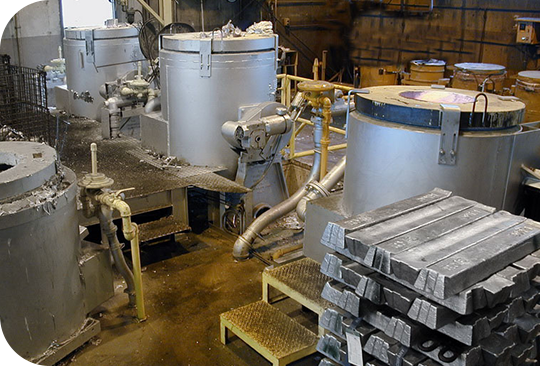
Moreover, the consumer electronic devices market employs aluminum casting for rooms and warmth sinks, guaranteeing sturdiness while preserving aesthetic appeal. In the check here building and construction field, aluminum castings are utilized for architectural components and building elements, supplying both capability and layout versatility.
In addition, the clinical equipment market counts on aluminum castings for manufacturing tools that need precision and hygiene. Overall, aluminum casting's convenience and effectiveness make it an indispensable procedure across numerous markets, meeting the needs for high-volume manufacturing while preserving top quality and performance.
Regularly Asked Questions
How Does Aluminum Casting Compare to Other Products?
Aluminum casting deals benefits over other products, such as light-weight strength, deterioration resistance, and excellent thermal conductivity (Metal Casting). These homes make it more effective for various applications, especially where resilience and effectiveness are paramount in production procedures
What Are the Common Lead Times for Aluminum Casting Projects?
Regular preparation for aluminum casting jobs range from 2 to 6 weeks, relying on variables such as intricacy, mold and mildew preparation, and production quantity. Efficient processes can significantly reduce these times for high-demand production needs.
Can Aluminum Casting Be Recycled After Use?
What Kinds of Defects Can Occur in Aluminum Casting?
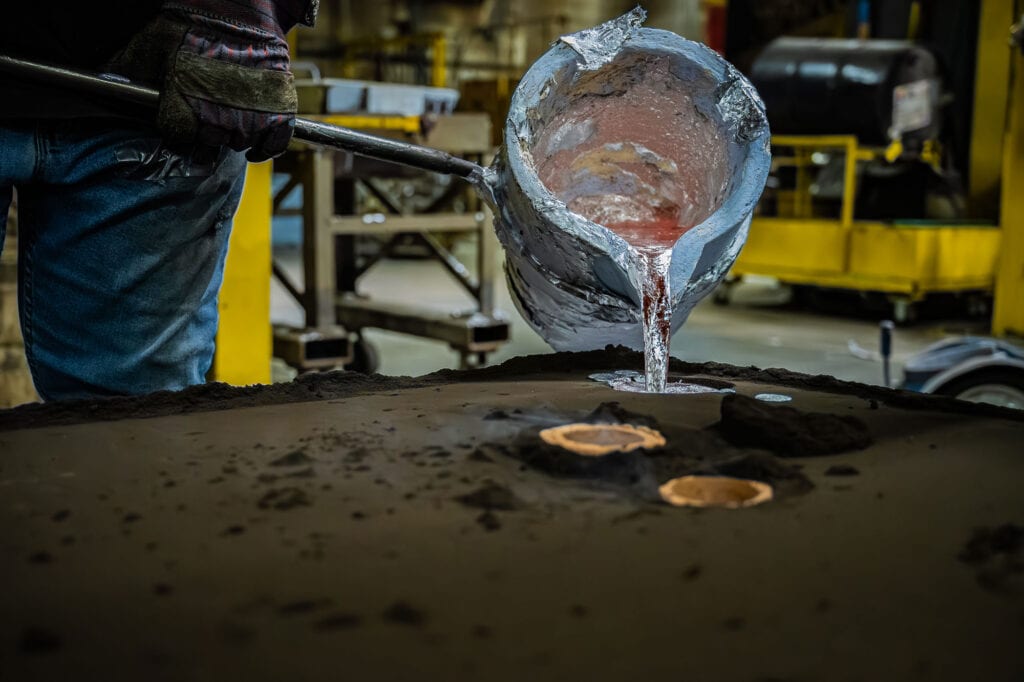
Usual flaws in aluminum casting include porosity, shrinking, misruns, and additions. YOURURL.com These concerns can develop from incorrect mold and mildew style, inadequate pouring techniques, or inaccurate temperature control, potentially influencing the mechanical properties and general top quality of the casting.
Exactly How Is Top Quality Control Managed in Aluminum Casting?
Quality control in aluminum casting is taken care of with strenuous inspections, adherence to industry criteria, and the execution of real-time surveillance systems. These practices guarantee uniformity, lessen problems, and keep high-quality production throughout the production procedure.
As producers look for means to optimize their manufacturing processes, recognizing the complete extent of aluminum casting's benefits becomes essential. Efficiency in manufacturing procedures is crucial for taking full advantage of the advantages of aluminum casting in high-volume production. Streamlining production processes considerably minimizes cycle times in aluminum casting. The procedure utilizes recycled aluminum, which requires only 5% of the energy needed to produce primary aluminum. As sectors increasingly focus on sustainability, aluminum casting stands out as a liable selection, lining up with global initiatives to reduce ecological impact while fulfilling the needs of high-volume manufacturing.
Comments on “The Benefits of Aluminum Casting for Cost-Effective Prototype Production”